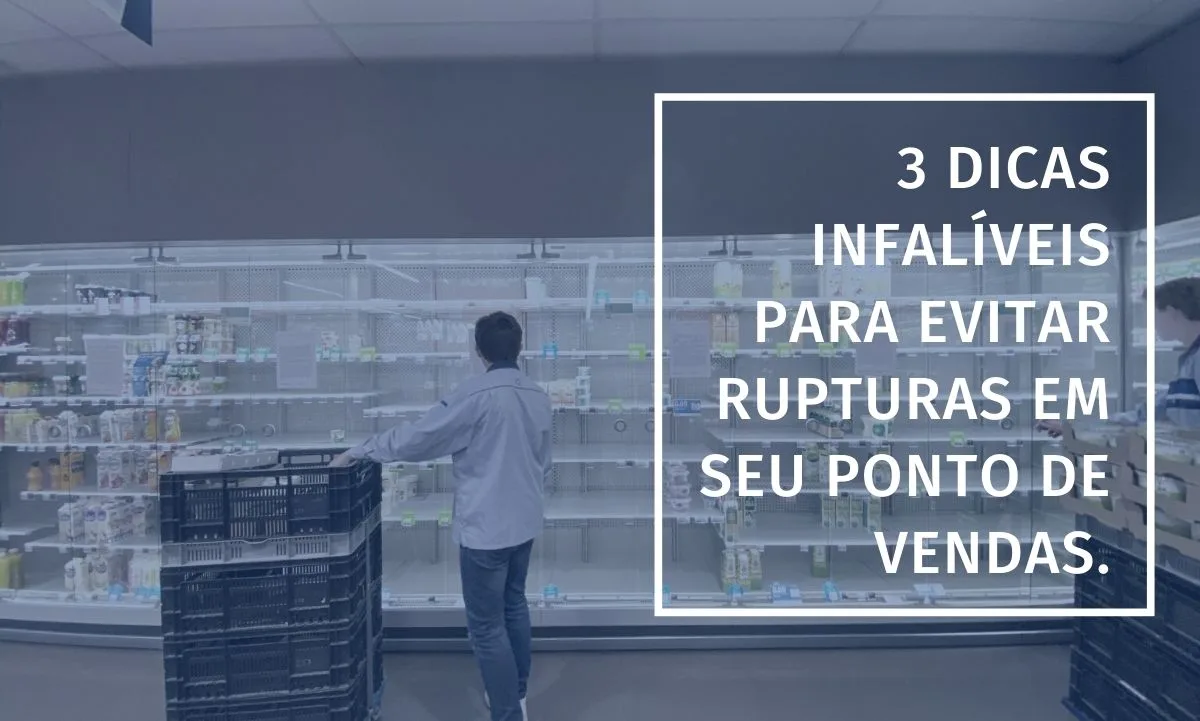
Losing customers is something no business wants. Here are proven tips to avoid stockouts at your point of sale.
Learn the 3 most effective tips to prevent stockouts at the point of sale.
Stockouts at the point of sale happen more frequently than many business owners realize. When they occur, they may signal deeper problems within the operation.
One of the worst things for any business owner is seeing stockouts at their point of sale. It is unpleasant for the owner and for the consumer who arrives and cannot find the product they want.
Stockouts cause shopper dissatisfaction (the person making the purchase, who may or may not be the final consumer) and create high-impact losses for retailers. These impacts can cost the point of sale lost revenue and damage the relationship and loyalty between the brand and the store.
Research shows that retail stockouts affect up to 10% of consumers. This means for every 100 products in a store's catalog, roughly 10 are out of stock at any given time.
A study by ESPM (Escola de Propaganda e Marketing) found that when shoppers cannot find what they are looking for: 17% delay the purchase, about 11% give up entirely and around 37% look for other stores.
These results confirm that stockouts occur frequently across various market sectors, generating losses for business owners and consumer dissatisfaction.
When a shopper arrives at the POS and cannot find their product, they either buy from a competing brand or travel to another store.
Finding the root cause of stockouts is the first step. This task is not easy due to supply chain complexity. The questions are endless: Was it the brand promoter's fault for not restocking the shelf properly? Was it a logistics failure? Or poor planning by the manufacturer or retailer?
Here are three proven strategies to combat stockouts:
1. Real-time inventory monitoring
The most effective way to prevent stockouts is to have real-time visibility of shelf conditions. Field team management tools that capture geolocated photos and stock data during every visit enable managers to spot potential stockouts before they happen.
2. Optimize your replenishment process
Analyze historical sales data to forecast demand accurately. Work closely with your supply chain team to ensure products arrive at the right stores in the right quantities at the right time.
3. Strengthen communication between field teams and management
When promoters can report stockout risks instantly through a mobile app, managers can take corrective action the same day. This real-time communication loop is what separates brands with strong shelf availability from those constantly fighting stockouts.
Platforms like Promo MKT Report automate this entire process -- from field data collection to manager alerts -- ensuring stockouts are caught early and resolved quickly.
How much does your operation cost?
Find out in 2 minutes.
Download PMR's free guide and learn how to calculate the real cost of each store visit.
Download free guide