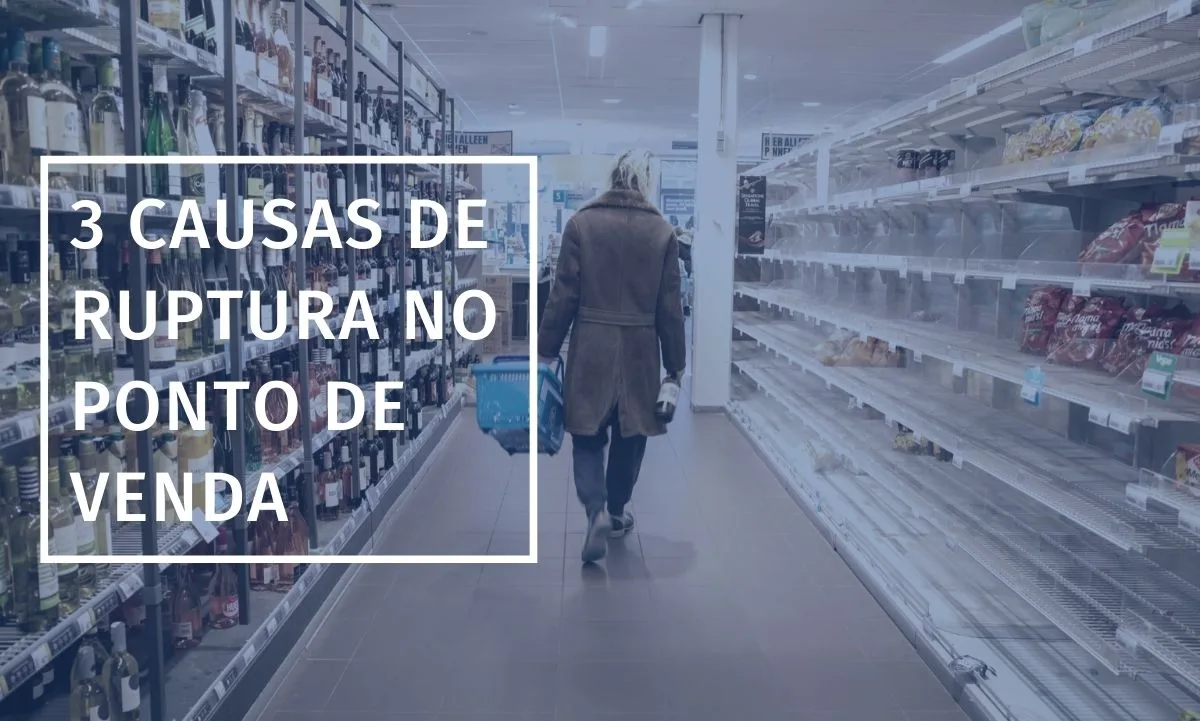
When consumers cannot find what they want, they feel frustrated — some switch brands, others switch stores. This feeling of loss, for both the consumer and the brand, must be avoided as it is one of the main causes of stockouts.
This generates significant losses for industry, retail and, above all, damages the relationship with consumers loyal to the store and the brand.
The store, in turn, needs to have a focused and defined assortment. It must choose which key items to stock and maintain focus on those. It is impossible to offer and sell everything.
With this problem in mind — one that can have major consequences throughout the supply chain — here are 3 causes of stockouts at the point of sale:
1. Inadequate or nonexistent replenishment
Stockouts are often related to the store's back stock. The product exists but is not on the shelf display, making it invisible to the consumer. Disorganized open boxes and clutter can delay product replenishment.
The quantity of products on the shelf should be sufficient until the next restocking day. The smaller the shelf space, the faster the replenishment should be.
2. Virtual inventory is a major cause of stockouts
Virtual inventory means the product shows as available in the system but is not actually on the sales floor. This failure happens due to poor internal controls and operational errors.
For example, a consumer buys three different types of detergent, but at checkout, all are scanned as a single variety.
In this example, training is needed so employees understand the impact this error can have on stockout tracking.
3. Poorly planned campaigns and promotions
Promotional campaigns drive sales and increase brand visibility, but many experts agree they are major causes of stockouts. Before creating a campaign, you must define: assortment, replenishment and price display.
It is necessary to have a clear objective for the campaign — whether it will generate trial, traffic or accelerated sales with lower margins. A retailer may run an opportunistic campaign but forget that these early sales can lead to lower results in subsequent months or even stockouts at the point of sale.
Another situation involves promotions with complementary products. For example, if pasta goes on sale, sauces and grated cheese must have enough stock to meet the demand — otherwise, the customer may purchase them elsewhere.
There is nothing wrong with running promotional campaigns, as long as there is a long-term study to ensure sufficient stock.
It is essential to prevent or eliminate stockouts at the point of sale, and to do so you need:
1) Know the correct store assortment through product reviews, an efficient display planogram, and a plan to prevent losses and damages.
2) Participation from everyone involved in the process is essential to achieve results. Field representatives can seek extra display space and more shelf space.
3) Always monitor minimum stock levels and sales variations of your products in each store.
4) Online survey submission systems can help send critical information quickly so all stakeholders can act promptly to address the causes.
How much does your operation cost?
Find out in 2 minutes.
Download PMR's free guide and learn how to calculate the real cost of each store visit, including travel, salary and charges.
Download free guide